Why So Many Women Feel Disconnected From Their Lives
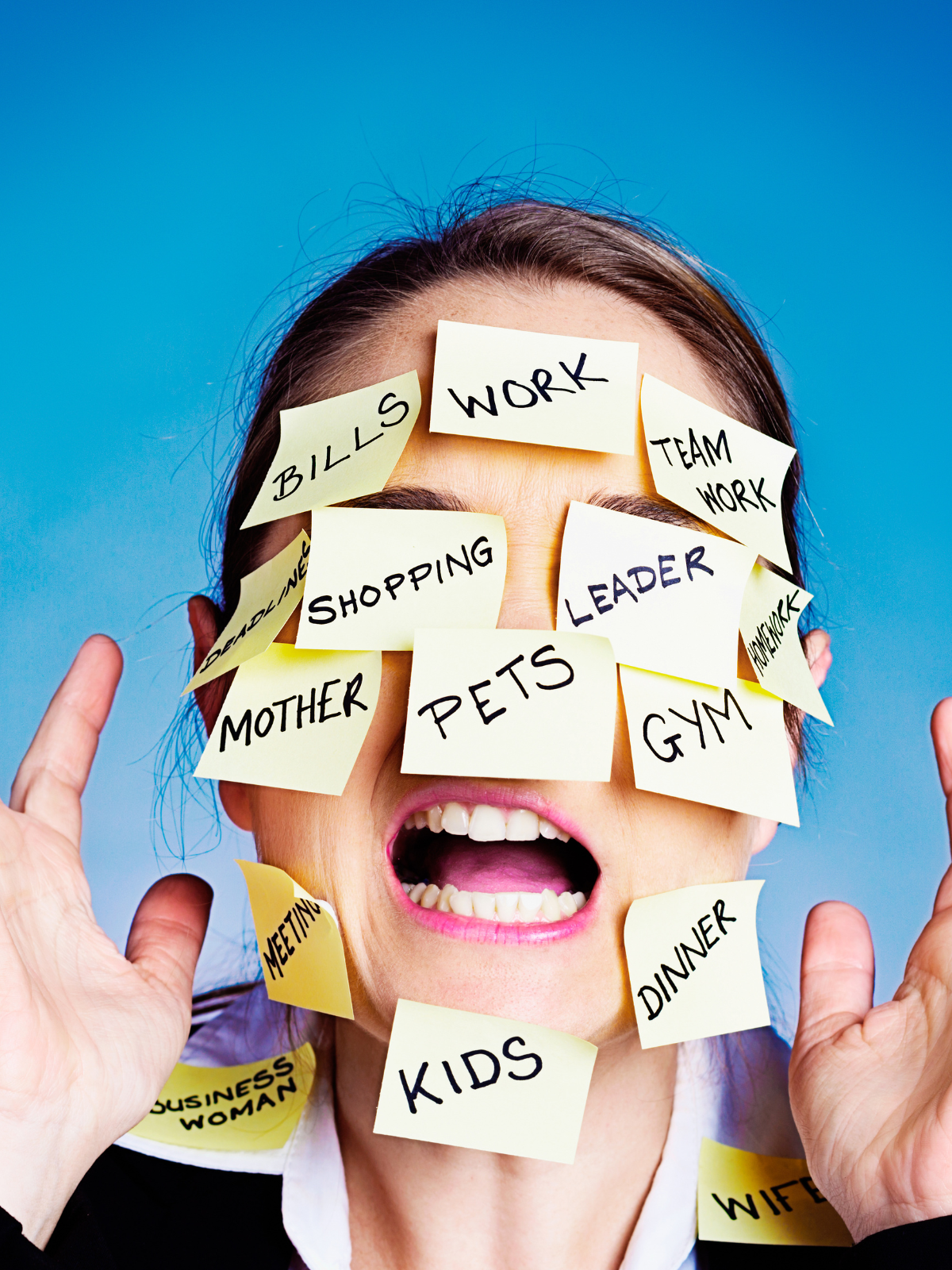
There is a particular kind of exhaustion that does not come from doing too much in a single day.
It comes from living too long without yourself fully present.
You can have a life that looks fine on paper.
A family. A job. A business. Responsibilities handled. Boxes checked.
And still feel strangely distant from your own body, your intuition, your sense of direction.
This is not a post about fixing yourself.
It is about understanding why so many women feel disconnected in the first place, and what actually helps you come back.
Disconnection Is Not a Personal Failure
Most women blame themselves for this feeling.
They assume they are unmotivated. Ungrateful. Burned out. Broken.
But disconnection is not a character flaw.
It is a nervous system response to living inside systems that demand constant adaptation, emotional labor, and availability.
Research on stress and burnout shows that prolonged exposure to chronic demands, especially when combined with little recovery time, leads to emotional exhaustion, detachment, and a reduced sense of personal efficacy¹.
When your days are shaped by urgency instead of meaning, your system adapts by numbing.
You keep going.
You stay responsible.
But you are no longer fully there.
That numbness is not weakness.
It is protection.
Why This Disconnection Hits Women Especially Hard
Women carry a disproportionate amount of invisible labor.
Caregiving.
Emotional regulation.
Mental load.
Relationship maintenance.
Household coordination.
Research on gendered labor shows that women experience higher cognitive and emotional workload, even when working the same hours as men².
Add constant digital stimulation, social comparison, and pressure to do everything well, and the nervous system never fully settles.
Studies on social media use show that women are more likely to engage in comparison-based consumption, which is associated with increased anxiety, lower self-esteem, and depressive symptoms³ ⁴.
So when women say they feel disconnected from their lives, what they are often describing is long-term self-abandonment in service of keeping everything else running.
Modern Life Rewards Productivity, Not Presence
We are taught to manage time.
Optimize output.
Stay useful.
Very few spaces ask:
How does your body feel in your life?
Does your work support your nervous system?
Does your pace match your values?
When presence is not valued, it slowly disappears.
This is why rest feels uncomfortable.
Why stillness feels unfamiliar.
Why silence can feel threatening.
Research on always-on work culture shows that constant connectivity impairs recovery and increases emotional exhaustion, even when productivity remains high⁵.
You have not lost yourself.
You have been trained away from yourself.
Disconnection Often Looks Like “Functioning”
This is the part many women miss.
Disconnection does not always look dramatic.
It looks like:
Doing everything right and feeling nothing about it
Being capable but tired in a deep, unfixable way
Living on autopilot
Feeling irritated, numb, or foggy without knowing why
Occupational health research describes this as resource depletion. People continue to perform while internally running on empty⁶.
Functioning on the outside.
Fried on the inside.
The Way Back Is Slower Than You Think
There is no dramatic awakening required to return to yourself.
The nervous system does not respond to force.
It responds to safety.
The way back begins with small, grounded shifts:
Noticing when your jaw is clenched
Pausing before responding
Letting one thing be enough for today
Research on slow living and intentional disconnection shows that even brief reductions in stimulation support emotional regulation, presence, and a sense of meaning⁷.
Reconnection is not a lifestyle aesthetic.
It is a daily relationship.
It is choosing to live in your body again.
What Rooted Living Actually Means
Being rooted does not mean abandoning your responsibilities.
It means meeting them differently.
A rooted life is one where:
• You listen to your energy before your calendar
• Your body informs your decisions
• Your work supports your life, not the other way around
Rooted living aligns with research on value-based living, which shows that when actions are guided by personal values rather than external pressure, people experience greater psychological well-being and lower stress⁸.
Rooted is not about doing less for the sake of it.
It is about doing what matters from a place of presence and intention.
Why We Need Rooted Spaces Now
People are not just tired.
They are disoriented and exhausted.
Overstimulated by information.
Numb from constant negativity.
Disconnected from their bodies and from one another.
Despite increased connectivity, research continues to show rising loneliness and anxiety³ ⁴.
People do not need more content.
They need places that feel human again.
Places where:
-> Enough is allowed
-> Rest is not earned
-> Connection comes before productivity
That is why Rooted exists.
Why I Created the Rooted Guide
I created Rooted: A Guide to Return to Yourself because reconnection is no longer optional.
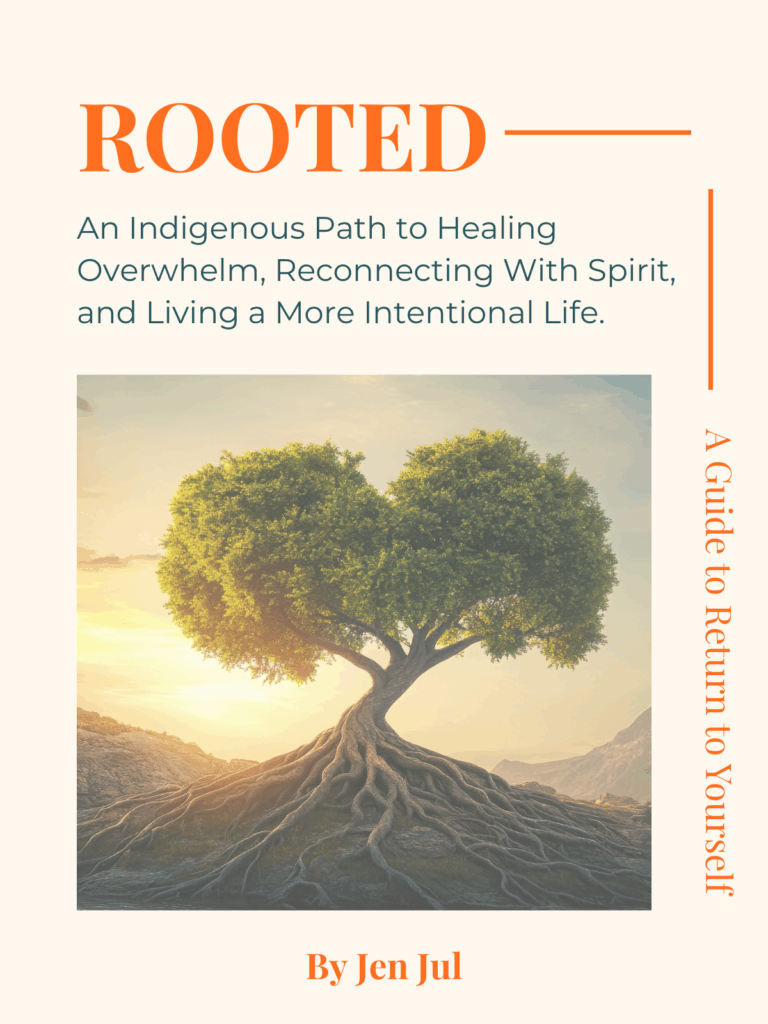
Burnout, loneliness, and anxiety are rising even as our tools become more advanced. Research is finally catching up to what many women have been feeling in their bodies for years.
Rooted is not a productivity system.
It is not a mindset workbook.
It is a grounded framework built around real life, real responsibilities, and nervous system safety.
Rooted helps you:
• Slow your pace without falling behind
• Reconnect with your body and intuition
• Create rhythms that support your life as it is
You do not need to overhaul everything.
You need a way back to yourself that fits inside your real life.
Explore the Rooted Guide here.
References
- World Health Organization. (2019, May 28). Burn-out an “occupational phenomenon”: International Classification of Diseases.
https://www.who.int/news/item/28-05-2019-burn-out-an-occupational-phenomenon - Daminger, A. (2019). The cognitive dimension of household labor. American Sociological Review, 84(4), 609–633.
https://journals.sagepub.com/doi/10.1177/0003122419859007 - Grand Rising Behavioral Health. (n.d.). The impact of social comparison on mental health.
https://www.grandrisingbehavioralhealth.com/blog/the-impact-of-social-comparison-on-mental-health - LeBlanc-Brillon, J., Fortin, J.-S., Lafrance, L., & Hétu, S. (2025, August 8). The associations between social comparison on social media and young adults’ mental health. Frontiers in Psychology.
https://pubmed.ncbi.nlm.nih.gov/40861344/ - Consiglio, C., Borgogni, L., Di Tecco, C., & et al. (2023). Techno-stress creators, burnout and psychological health among remote workers. International Journal of Environmental Research and Public Health.
https://pmc.ncbi.nlm.nih.gov/articles/PMC10671499/ - Hobfoll, S. E. (2001). The influence of culture, community, and the nested-self in the stress process. Applied Psychology, 50(3), 337–421.
https://psycnet.apa.org/record/2001-07436-001 - Syvertsen, T. (2025). Slow tourism and digital disconnection: Place, norms, and presence. Tourism Recreation Research.
https://www.tandfonline.com/doi/full/10.1080/11745398.2025.2539137 - Hayes, S. C., Strosahl, K. D., & Wilson, K. G. (2012). Acceptance and commitment therapy: The process and practice of mindful change. Guilford Press.
https://www.guilford.com/books/Acceptance-and-Commitment-Therapy/Hayes-Strosahl-Wilson/9781609189624