What Bad Bunny’s Super Bowl Halftime Show Meant to Me
This Was Not Entertainment. It Was a Reckoning.
When Bad Bunny stepped onto the Super Bowl Halftime Show stage, this was not just a performance. This is what the Bad Bunny Super Bowl halftime show meant to me as an Indigenous woman living abroad.
It felt like a pulse.
A call back to memory.
A declaration that culture does not disappear just because we live far from where we began.
It was 4 a.m. I was in bed. I cried the first time I watched it.
Not because it was flashy. Because it was deliberate.
Every element meant something.
Why This Performance Hit So Deeply
As an Indigenous woman living abroad and raising children far from my motherland, I felt something open in a visceral way. Not from spectacle. From recognition.
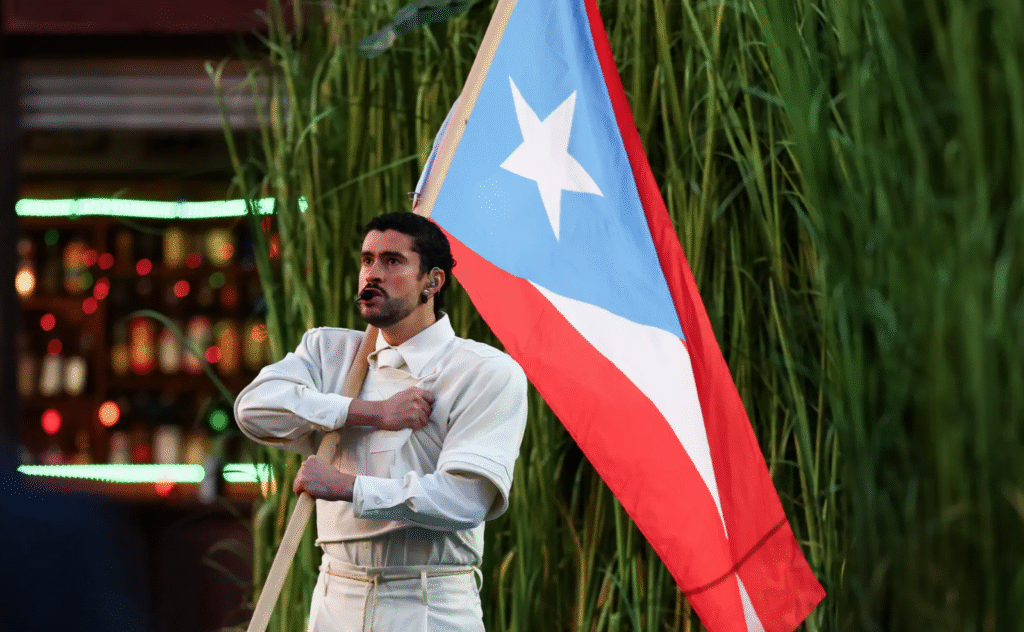
Bad Bunny did not walk out as a pop star. He walked out as a Puerto Rican man carrying generations with him. The rhythms. The visuals. The language. The everyday imagery of his people. These were not decorations. They were identity markers.¹
That is what made this performance revolutionary.
His Super Bowl LX halftime performance, viewed by over 135 million people, became a 14-minute assertion of Latinx culture, identity, and political resistance for millions of viewers, especially Puerto Ricans and the Latinx diaspora. There was so much meaning and relevance in such a short time.
He became the first artist to perform primarily in Spanish on the NFL’s biggest stage.² That matters.
Language carries memory. Language carries place. And when you live abroad, language becomes everything.
The Symbols Were Not Aesthetic. They Were Historical.
What struck me most was how clearly the performance centered on Puerto Rican life.
The sugarcane fields.
The pastel homes.
The street scenes.
The reggaeton and salsa rhythms.
These were references to labor history, colonial history, migration, resilience, and community.³
For many viewers, this was music. For those of us in diaspora, it was remembrance.
What This Performance Did for Millions of Minority Viewers
This was not accidental. It was intentional cultural storytelling on the world’s largest stage.
Here is what that performance did.
It affirmed language and identity
By performing fully in Puerto Rican Spanish without translating for a mainstream audience, he validated the language and identity of millions of Spanish speakers. He challenged the idea that English is the only acceptable language of American entertainment.
It challenged political oppression
The imagery of the pava hat, references to colonial struggle, and historical visuals were quiet acts of resistance against the marginalization of Latin Americans and Puerto Ricans.
It highlighted internal colonialism
References to Puerto Rico’s power grid crisis, gentrification, and the island’s complex relationship with the United States brought visibility to issues many mainland viewers rarely confront.
It promoted inclusivity and belonging
Ending the performance holding a football that read “Together, We are America,” surrounded by flags from North and South American nations, he redefined what American identity can look like.
It fostered collective resilience
For many, this was a moment of radical healing. Music became a tool for hope, pride, and a sense of shared community and belonging for people often treated as “other.”
It challenged gender norms
Through his styling and performance choices, he continued to push back against traditional machismo and openly supported LGBTQ+ and feminist visibility within the Latino culture.
This was not a halftime show.
It was cultural reclamation.
Why This Matters to Those of Us Living Abroad
Diaspora is a strange experience. You carry your culture inside your chest. It’s heavy and you are always aware of it. You teach it to your children in kitchens and bedtime stories. You remind them who they are, so they never forget.
You live in a place that is not yours while trying not to lose the place that is.⁴
Watching this felt like seeing that inner work displayed for the world to witness.
It said something without saying it directly.
You are not invisible.
Your culture is not small.
Your history belongs here too.
Representation, Identity, and Belonging on the Super Bowl Stage
Researchers say representation is not visibility. It is validation.⁵ When people see themselves portrayed with dignity, identity, and belonging strengthen.
That is exactly what happened here.
The controversy that followed only proved the point.⁶ Because what unsettles people often reveals how narrow their idea of belonging has been.
Who gets to define what “American” looks like?
Bad Bunny’s answer was clear. America is multilingual. Multiracial. Multicultural. Deeply shaped by Caribbean, Latin American, and Indigenous histories long before borders were drawn.⁷
What This Meant to Me
Living in Denmark, I am constantly practicing remembrance with my children. As a mom, I teach them who they are. I teach them that they come from somewhere powerful and deeply rooted. That they carry ancestors with them even when they cannot see the land those ancestors walked.
Representation is not about fame.
It is about reclaiming space.
Moments like this tell every child of the diaspora that their story is part of the main narrative. When people ask about the Bad Bunny Super Bowl halftime show meaning, this is what I will always return to.
This Was a Ceremony of Remembrance
If you felt chills. If you felt tears. If something stirred in you and you could not explain why, it is because this was not a show.
It was a ceremony.
A love letter to people who have survived displacement, colonization, migration, and erasure and are still dancing anyway.
And maybe that is the lesson for those of us far from home.
Keep dancing.
Because dancing is how we remember.
References
- Rivera-Rideau, P. R. (2015). Remixing Reggaetón: The Cultural Politics of Race in Puerto Rico. Duke University Press.
- NFL viewership data and halftime cultural analysis reported by Associated Press Sports, 2026.
- Duany, J. (2002). The Puerto Rican Nation on the Move: Identities on the Island and in the United States. University of North Carolina Press.
- Hall, S. (1990). Cultural identity and diaspora. In Identity: Community, Culture, Difference. Lawrence & Wishart.
- Tukachinsky, R. (2015). Where we have been and where we can go from here: A review of research on media representation and identity. Journal of Social Issues, 71(1).
- Media commentary and public reaction coverage from Entertainment Weekly and major U.S. news outlets, February 2026.
- Mignolo, W. (2011). The Darker Side of Western Modernity: Global Futures, Decolonial Options. Duke University Press.